Annual Misogi Expedition · Est. 2025
The Quiet Will
Capability—not motivation—determines the outcome.
What This Is
Not a Hiking Blog.
A Body of Doctrine.
The Quiet Will is an ongoing study of what it means to deliberately seek difficulty, prepare honestly, and become more capable through experience.
Each expedition contributes planning, preparation, execution, an After Action Report, and doctrine updates. Over time, this creates institutional knowledge — not isolated experiences.
Read the Philosophy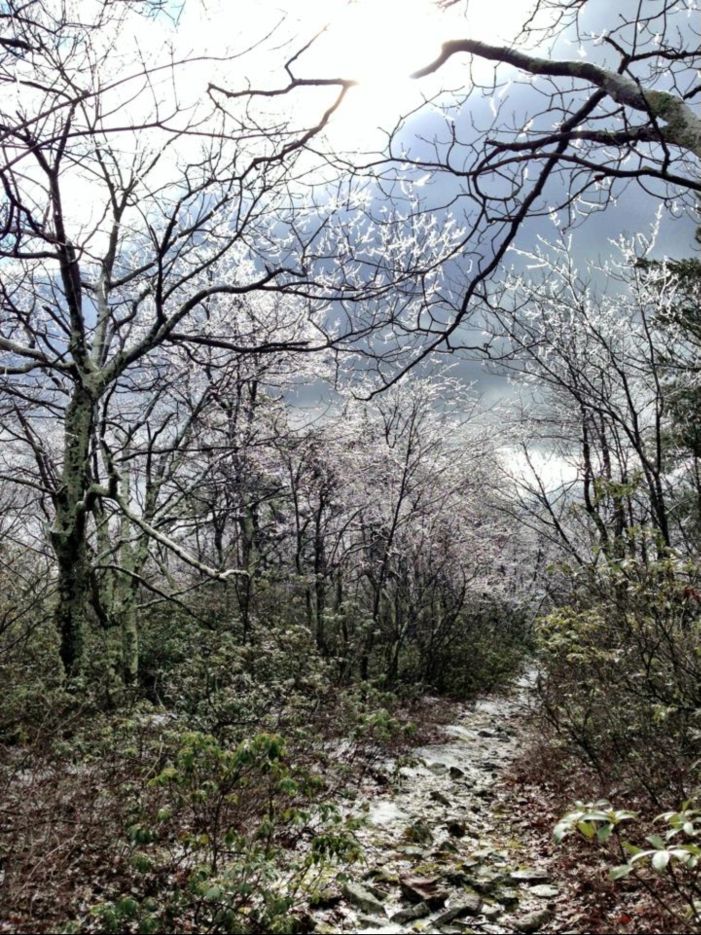
Context
183 million Americans went outside in 2025. Most of them walked, sat by a fire, or pitched a tent within sight of the car.
63 million of them hiked a trail.
A small fraction backpacked overnight — carried everything they needed on their backs and slept where the trail put them. That number has been shrinking for over a decade. More people are choosing single-day effort over sustained effort.
Appalachian Trail
Around 4,000 people each year attempt to thru-hike the Appalachian Trail. Roughly one in four finish. They have months to adapt, resupply, recover, skip sections, and return when they're ready.
Western States 100
369 runners toe the line. One hundred miles. Eighteen thousand feet of climbing. Aid stations. Medical support. Pacers. Crews. A thirty-hour clock.
More than 11,000 people entered the lottery this year for those 369 starting positions.
None of those numbers describe what happens here.
What we will do
43.97
Miles
8,848
Feet of Ascent
Three
Days
Nov
First Week
This region has produced single-digit temperatures and multiple feet of snow within forty-eight hours during this same week of the year.
No aid stations.
No crew.
No finish line.
No lottery.
No lanyard.
No bib number.
No spectators.
No one tracking our progress from a warm living room.
One vehicle at the halfway point.
Not an exit • A checkpoint.
The Appalachian Trail offers a season to recover from mistakes.
Western States offers support at nearly every critical point.
Our expedition offers neither.
Not because support is wrong. Because we are choosing to answer a different question.
Capability is not measured by mileage.
It is not measured by elevation.
It is measured by what remains when comfort, convenience, and certainty have all been removed.
The mountain does not know the odds.
It does not know how long you trained.
It does not know what you intended to accomplish.
It only knows whether you arrive prepared.
Preparation begins now. November will decide.
The Quiet Will.
Record
The Expeditions
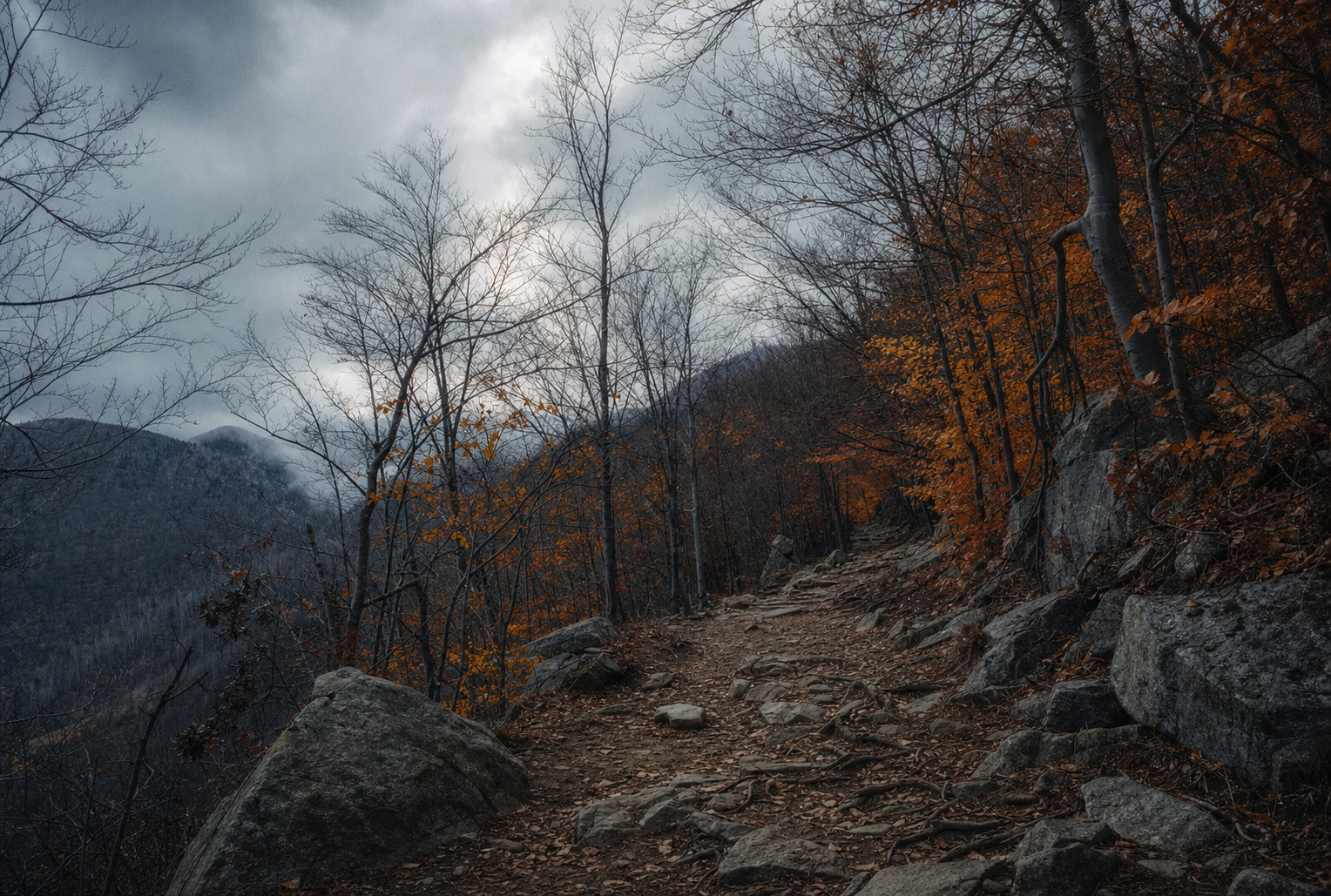
The First Chapter
~20 miles. ~3,500 feet of elevation. The expedition ended before planned completion — and served as the foundation of everything that follows.
Complete · After Action Filed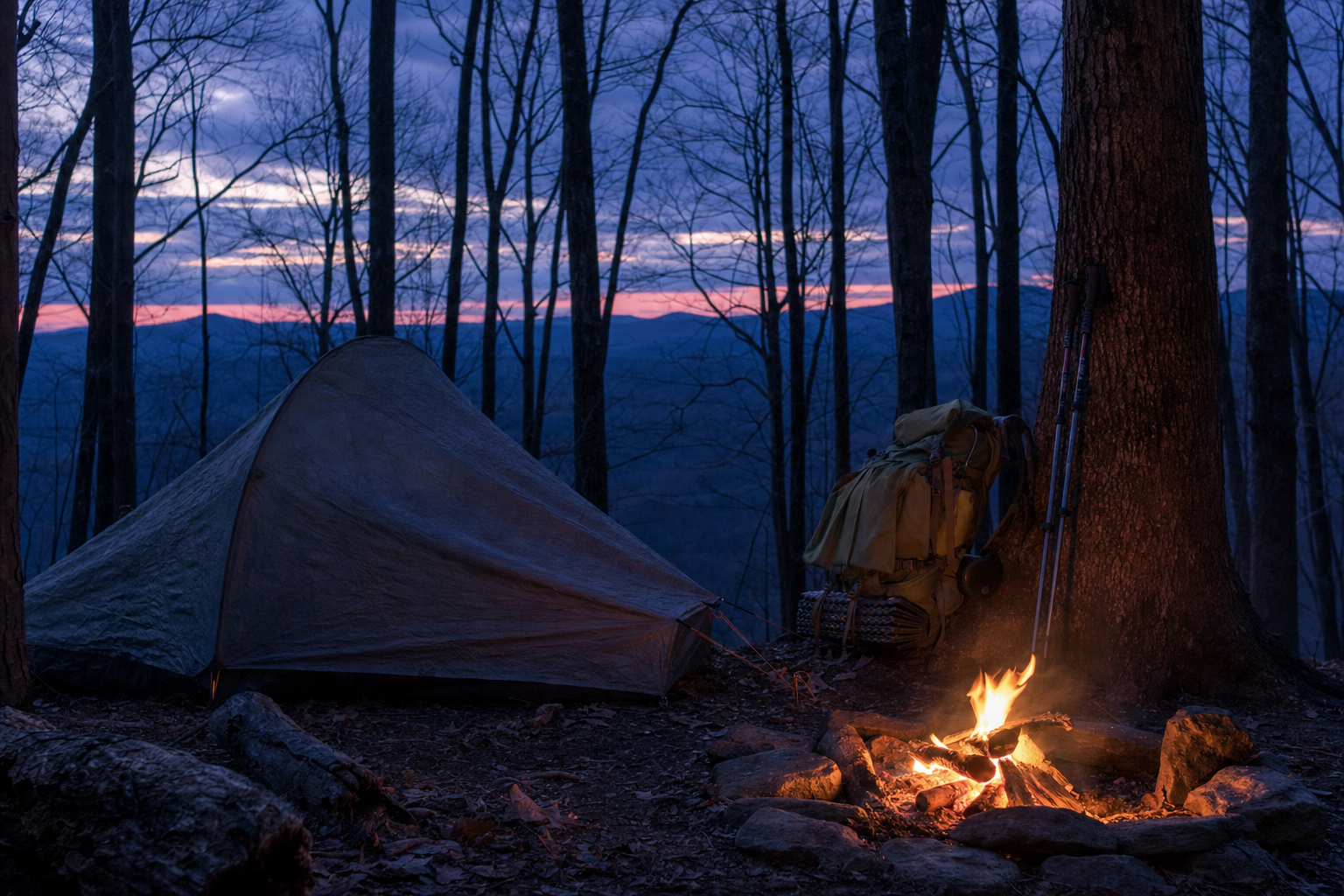
Return to the Mountain
Three days. First week of November. Same trail system, different entry and exit. Southern Taurid meteor shower. No convenience exits.
Active PlanningWorking Principles
Expedition Doctrine
Capability Before Suffering
The expedition is an examination, not a punishment. Arrive prepared or do not arrive at all.
No Convenience Exits
Safety planning stays. Psychological escape hatches do not. The vehicle at the halfway point was also a way out.
Water Is Never Assumed
Verify every source. Carry capacity to bypass failed assumptions. The mountain does not accommodate optimism.
Every Expedition Writes Doctrine
Failure is the first chapter. What went wrong becomes the rule that goes right the next time.
Respect the Mountain
The terrain does not negotiate. Humility in planning is not weakness — it is the only form of preparation that works.
The Mountain Is the Final Instructor
Every plan ends at the trailhead. What the mountain teaches is the only lesson that matters.

Purpose
The Expedition Is the Examination.
Not the Proof.
The purpose of Misogi is not to prove toughness. It is to become the kind of person capable of completing extraordinary things — through preparation, humility, and deliberate practice.